How to Build a Wedding Day Timeline That Feels Stress-Free (Real Example Included)
A well-planned wedding timeline doesn’t just keep things organized. It protects how your day actually feels.
Because the biggest stress on a wedding day usually isn’t one big thing. It’s small delays stacking up, moments feeling rushed, and realizing too late that there’s no time to slow down.
The good news is most of this is avoidable with a little intention upfront.
Where Timelines Start to Fall Apart
One of the most common mistakes is underestimating how long things take. Hair and makeup runs late. Getting dressed takes longer than expected. Family members wander off right when you need them.
Time adds up quickly.
Building buffer time into your timeline is one of the simplest ways to avoid unnecessary stress. Even an extra 10–15 minutes between major parts of the day can make everything feel more relaxed instead of rushed.
Another big one is how the day is structured around light.
Midday sun can be harsh, especially for outdoor weddings, while golden hour offers the soft, flattering light couples love. Planning your portraits with lighting in mind makes a noticeable difference in how your photos turn out, without requiring anything extra from you.
Family portraits are another place where timelines tend to fall apart.
Without a clear plan, this part of the day can feel chaotic and take much longer than expected. Having a list of groupings prepared in advance allows your photographer to move people in and out efficiently and keep everything on track.
How We Help Build a Stress-Free Timeline
Another factor that makes a huge difference is how your timeline is built in the first place.
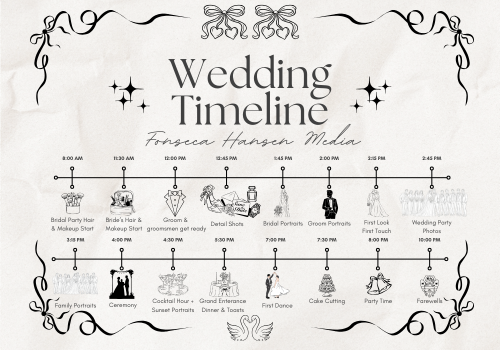
Before the wedding, we walk through a dedicated pre-wedding meeting with our couples to review the full timeline, not just photography, but how it aligns with every vendor involved. Hair and makeup, planner coordination, ceremony timing, reception setup, all of it.
Looking at the day holistically allows us to catch potential bottlenecks early, build in realistic timing, and create a flow that feels natural instead of rushed. It also gives couples clarity on what to expect, which removes a lot of the unknowns that can cause stress.
Why Having a Second Photographer Matters
When it comes to coverage, having a second photographer can be a game changer.
It allows multiple parts of the day to be captured at the same time. One photographer can stay with the bride while the other is with the groom. One can document cocktail hour while the other captures sunset portraits.
It keeps the timeline moving without sacrificing moments.
Without that extra coverage, everything has to happen more sequentially, which can add pressure to an already full day.
Final Thoughts:
One thing couples often overlook is creating space for private moments.
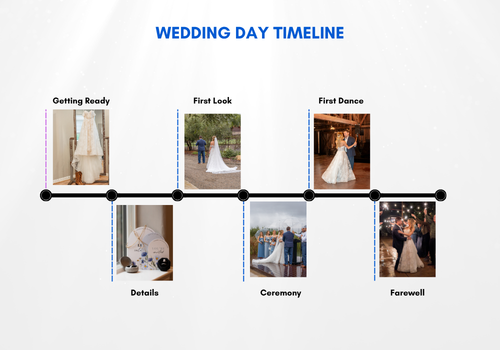
Whether it’s a first look, a quiet moment after the ceremony, or stepping away during the reception, these small pockets of time can help you reset and actually take in what’s happening. Without them, the day can feel like it flies by in a blur.
And lastly, trying to fit too much into one day is where stress really builds.
A packed timeline might look good on paper, but it often leaves no room for things to run naturally. The best timelines aren’t the most efficient. They’re the ones that give you space to enjoy the day as it unfolds.
At the end of the day, your timeline isn’t just about logistics. It shapes your entire experience.
When it’s built with intention, everything flows better. You feel more present, your guests feel more relaxed, and your photos reflect that energy.
Reach out here to book us as your wedding photographers today, before you date books up!
